
Your Desk Might Be the Problem (Not Your Posture)
.JPG/v1/fill/w_320,h_320/file.jpg)
VFJ Pilates | Work From Home Tips
Alignment Awareness at Home
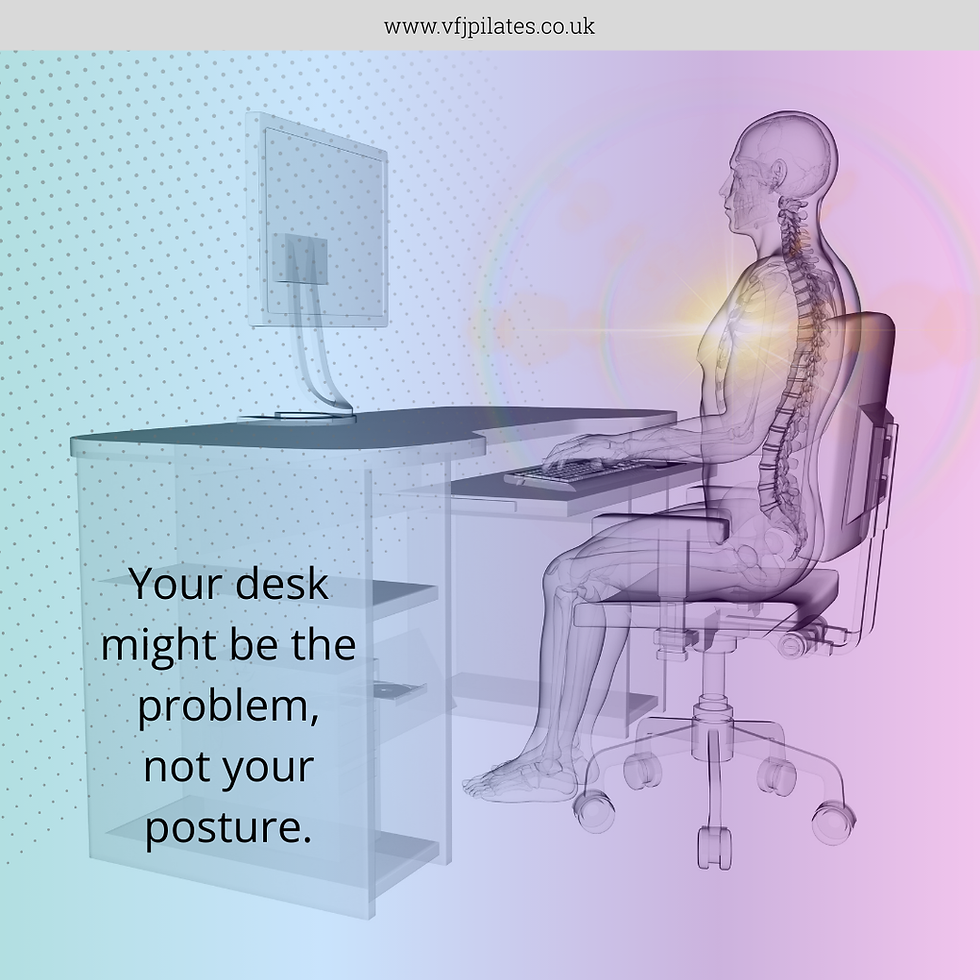
It is easy to blame your posture when your back starts to ache, but the truth is, your desk and chair setup might be making things harder than they need to be. If your screen is too low, your seat is too soft, or your feet are dangling, your body will adjust… but often not in a helpful way. Let's break down a few essentials to help your posture work for you, not against you.
Chair Height and Support
Sit so that your feet are flat on the floor and your knees are roughly level with your hips at a 90 degree angle. Your chair should support the natural curves of your spine, especially the lower back. If it does not, add a small cushion or rolled-up towel behind you.
Screen Position
Your screen should be at eye level. If you have to look down at a laptop all day, you are constantly dropping your head forward, which strains the neck and upper back. Try placing your laptop on a stand or a stack of books, and use a separate keyboard and mouse.
Desk Height
Your desk should allow your elbows to rest at roughly 90 degrees, close to your body. If you find yourself shrugging your shoulders or reaching forward all the time, your desk may be too high or too low.
Arm and Wrist Position
Keep your wrists in line with your forearms and avoid letting them droop or hover. This helps prevent tension in the shoulders and forearms, and reduces the risk of repetitive strain injuries.
Foot Placement
Both feet should rest flat on the floor or on a small footrest. Avoid tucking one foot under the other or sitting on your feet, which can create imbalances over time.
Extra Comfort Tips
Stand up or change position every 30–45 minutes
Use soft lighting to reduce eye strain
Keep frequently used items within easy reach to avoid twisting or overreaching
A great desk setup does not need to be expensive or complicated. A few simple changes can ease pressure on your spine, shoulders, and hips to help you feel more comfortable in your workday.
Alignment is key. Small adjustments in your setup can lead to big improvements in how your body feels by the end of the day.
— Victoria
Comments